
- 💊 Buy Gabapentin Online
- 💊 Buy Butalbital Online
- 💊 Buy Tramadol Online
- 💊 Buy Xanax Online
- 💊 Buy Ambien Online
- 💊 Buy Carisoprodol Online
- 💊 Buy Hydrocodone Online
- 💊 Buy Alprazolam Online
- 💊 Buy Cialis Online
- 💊 Buy Clonazepam Online
- 💊 Buy Diazepam Online
- 💊 Buy Flexeril Online
- 💊 Buy Levitra Online
- 💊 Buy Lexapro Online
- 💊 Buy Lorazepam Ativan Online
- 💊 Buy Methadone Online
- 💊 Buy Viagra Online
- 💊 Buy Valium Online
- 💊 Buy Tapentadol Online
- 💊 Buy Neurontin Online
- 💊 Buy Adderall Online
ADHD and Mental Clutter: Why Your Mind Feels Messy
- Home
- /
- Blog
- /
- ADHD and Mental Clutter: Why Your Mind Feels Messy
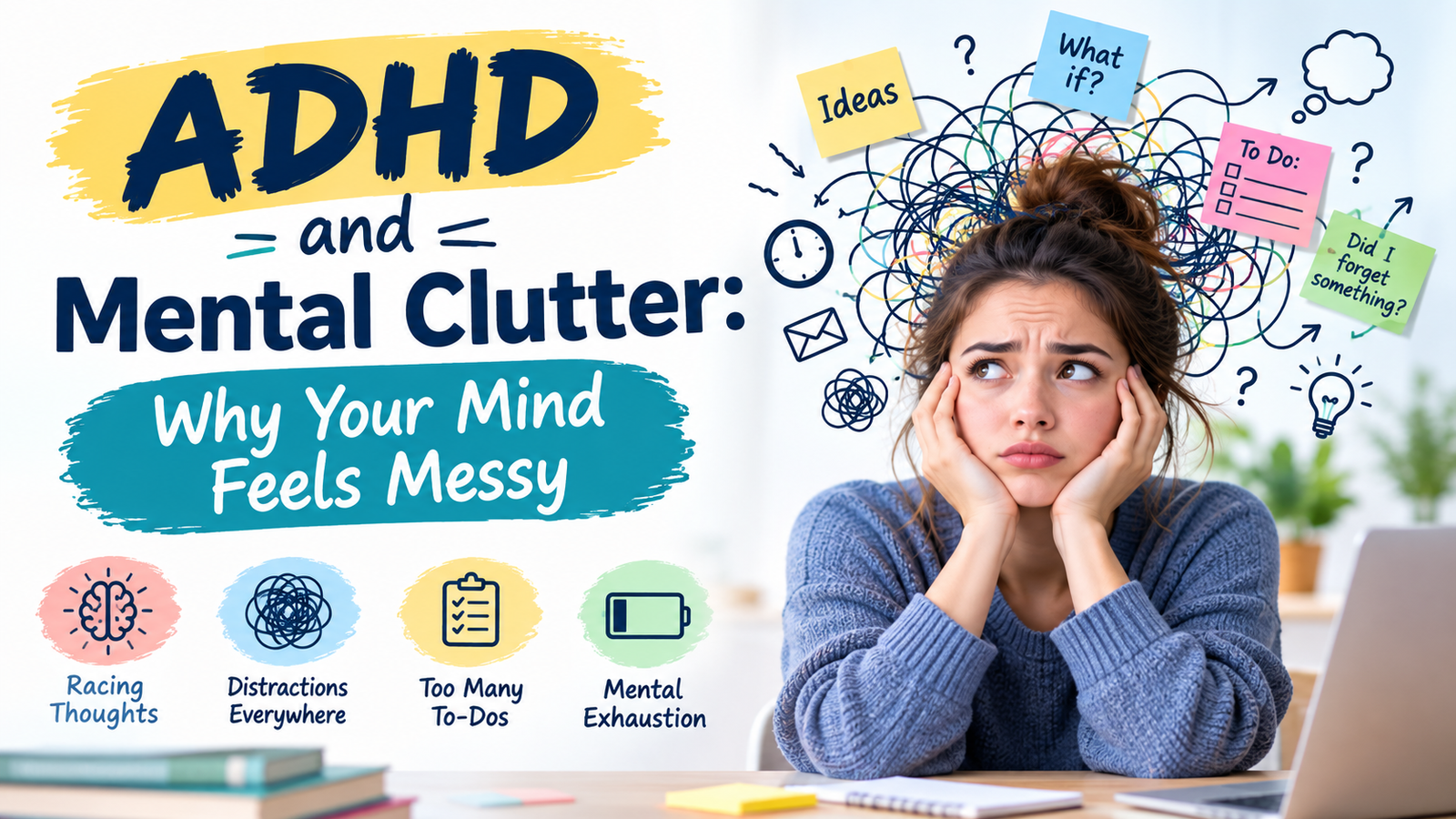
You may have a clean room, an organized desk, and a neatly arranged calendar, yet still feel as though your mind is carrying too many things at once. You remember unfinished tasks while working, worry about forgetting appointments, and struggle to decide which responsibility deserves your attention first.
For some people with attention-deficit/hyperactivity disorder (ADHD), this experience can be particularly frustrating. Their surroundings may look organized, but internally, they may struggle with competing thoughts, reminders, decisions, and responsibilities.
This experience can be described as invisible mental clutter. It is not an official medical diagnosis, but it can help explain the feeling of being mentally overwhelmed even when everything around you appears under control.
Understanding this experience can help you identify practical ways to manage daily demands, improve organization, and reduce unnecessary self-criticism.
What Is Invisible Mental Clutter?
Invisible mental clutter refers to the feeling that your mind is crowded with thoughts, worries, reminders, ideas, and unfinished responsibilities.
Imagine sitting at your desk to complete an important assignment. Before you begin, you remember an unanswered message, think about an upcoming appointment, recall a bill you need to pay, and wonder whether you forgot something at work.
Each thought seems important, so your attention moves from one responsibility to another. By the time you return to your assignment, you may feel mentally tired without having made much progress.
People with ADHD may experience difficulties involving attention regulation, working memory, planning, and prioritization. These abilities are associated with executive functioning, which helps us organize information and carry out tasks.
However, mental clutter is not exclusive to ADHD. Stress, anxiety, poor sleep, and other circumstances can produce similar experiences.
The central point is that physical organization and mental organization are different skills. A tidy room does not necessarily mean that managing everyday responsibilities feels easy.
Why Can Your Room Be Clean While Your Mind Feels Disorganized?
Physical organization can be supported by established habits, designated storage spaces, and predictable routines. Mental organization requires you to manage information, make decisions, remember intentions, and direct your attention.
Several factors may explain why these experiences differ.
1. You Are Trying to Remember Everything
You might repeatedly remind yourself about responsibilities because you are afraid of forgetting them.
While working, you may mentally rehearse your shopping list, remember an email you need to send, and think about a conversation you have been postponing.
These reminders can compete with your current activity.
A practical solution is to transfer reminders from your mind to a reliable external system. Use a notebook, calendar, or digital task list to record responsibilities as they occur to you.
You can then return to your current task instead of trying to remember everything simultaneously.
2. Every Responsibility Feels Equally Important
Mental clutter can increase when you have difficulty deciding which task should come first.
You might need to finish a report, respond to a message, clean your kitchen, and arrange an appointment. Each task feels urgent, so you spend more time deciding what to do than actually doing it.
Try dividing responsibilities into three categories:
Do now: Tasks with genuine urgency or an immediate deadline.
Do next: Important responsibilities that can wait until the first task is handled.
Do later: Activities that do not require attention today.
This approach creates a clearer starting point without requiring you to complete everything at once.
3. Unfinished Tasks Keep Returning to Your Mind
An incomplete task may repeatedly enter your thoughts because you are worried about forgetting it or dealing with its consequences.
You might remember an application every time you open your laptop or think about an unanswered message while trying to relax.
Instead of mentally rehearsing the task, record it and identify one concrete next step.
For example, change “finish the application” to “open the application and complete the first section.” A specific action is often easier to approach than a large, undefined responsibility.
4. Switching Between Thoughts Interrupts Your Progress
You start reading an article, notice a notification, check a message, and then remember another responsibility. When you return to the article, you have lost track of what you were reading.
Repeated switching can make ordinary tasks feel exhausting.
Try silencing nonessential notifications, keeping a brief note of your current task, and recording where you stopped before moving to another activity.
These strategies can help reduce unnecessary interruptions for people with ADHD and those experiencing everyday mental overload.
How ADHD Can Affect Executive Function
ADHD is a neurodevelopmental condition associated with persistent patterns of inattention and/or hyperactivity and impulsivity that interfere with daily functioning.
The National Institute of Mental Health's ADHD guide explains that ADHD can affect organization, time management, remembering everyday tasks, and completing projects.
These challenges can make mental clutter particularly frustrating.
For example, someone may understand exactly what needs to be done but struggle to choose a starting point. Another person may create a detailed plan but find it difficult to follow through when distractions arise.
Some people have difficulty holding several pieces of information in mind while completing a task. Others may find it challenging to shift their attention deliberately between activities.
The MedlinePlus ADHD overview provides additional information about symptoms, diagnosis, and management.
These difficulties do not automatically mean that someone has ADHD. A qualified healthcare professional considers the person's developmental history, symptom patterns, daily functioning, and other possible explanations before making a diagnosis.
The Emotional Side of Invisible Mental Clutter
One difficult aspect of mental clutter is that other people may not recognize it.
When your belongings are organized and your surroundings look tidy, people may assume that you have everything under control. If you continue to struggle with attention or task completion, you may start blaming yourself.
You might think:
“Why can't I finish something so simple?”
“I have organized everything, so why do I still feel overwhelmed?”
“Other people seem to manage their responsibilities more easily.”
“Maybe I am not trying hard enough.”
Repeated self-criticism can make starting a task even more uncomfortable.
Instead of judging yourself, try describing the actual difficulty. For example, “I have several competing priorities, and I need to choose one starting point.”
This shifts the focus from personal blame to a practical problem you can address.
For more general health information, visit the JustinMedz website or explore its health blog section.
Seven Practical Ways to Reduce Invisible Mental Clutter
You do not need an elaborate productivity system to make progress. Simple strategies that reduce the information you must remember and the number of decisions you must make can be more manageable.
1. Keep One Trusted Task List
Record responsibilities in one place instead of spreading them across notebooks, applications, and messages.
Choose a system that is easy to access and review. A complicated system may create additional work if it requires constant updating.
2. Separate Recording a Task From Doing It
When a new responsibility enters your mind, write it down rather than immediately changing activities.
For example, if you remember that you need to make a phone call while working, add it to your list and return to the current task.
This helps you acknowledge the reminder without allowing it to determine your next action.
3. Break Large Responsibilities Into Smaller Steps
Tasks such as organizing finances, completing paperwork, or cleaning an entire room may involve several decisions.
Instead of writing “organize everything,” choose a small first step, such as opening a document or putting laundry in a basket.
You can focus on the next action without mentally completing the entire project before you begin.
4. Plan Only Your Main Priorities
At the beginning of the day, identify one important task and two smaller responsibilities.
You do not need to schedule every minute. A flexible plan may be easier to maintain, especially when unexpected tasks arise.
5. Reduce Unnecessary Decisions
Keep frequently used items in consistent places, prepare essential materials ahead of time, and establish simple routines for recurring responsibilities.
For example, putting your keys and wallet in the same place each day reduces the need to search for them repeatedly.
6. Create a Transition Routine
Before switching tasks, write down what you have completed and what remains.
A short note such as “finish the final two paragraphs” can make it easier to resume work after an interruption.
Brief breaks and gentle movement may also help you reset between activities.
7. Build a System That Works on Difficult Days
A strategy is useful only if you can realistically maintain it.
If a detailed planner repeatedly goes unused, try a short checklist. If frequent notifications become distracting, reduce them to the reminders that matter most.
Review what helps rather than expecting yourself to follow a perfect routine every day.
Could Anxiety, Stress, or Poor Sleep Cause Mental Clutter?
Yes. ADHD is one possible explanation for persistent attention and organizational difficulties, but it is not the only one.
Anxiety can fill your attention with worries about possible mistakes or future events. Prolonged stress can make it harder to prioritize responsibilities. Poor sleep may affect concentration, memory, and emotional regulation.
Depression and some other health conditions can also affect motivation and thinking.
The CDC's ADHD diagnosis guidance explains that diagnosis involves several steps because other conditions, including anxiety, depression, and sleep disorders, can cause similar symptoms.
Consider when your difficulties began, whether they occur across different areas of life, and how much they interfere with daily functioning.
ADHD symptoms begin during childhood, although some people are not identified or diagnosed until adulthood. If your difficulties persist and affect work, education, relationships, or everyday responsibilities, consider discussing them with a qualified healthcare professional.
The NHS guide to ADHD in adults provides further information about symptoms, assessment, and support.
When Should You Seek Professional Support?
Consider professional advice if you regularly feel overwhelmed by ordinary responsibilities, struggle to maintain attention, or find that organizational difficulties interfere with daily life.
A healthcare professional can help assess whether ADHD, anxiety, sleep difficulties, another condition, or a combination of factors may be involved.
If you already have an ADHD diagnosis, discuss persistent challenges with your healthcare professional. They can help you explore appropriate organizational strategies, psychological support, and treatment options.
For general website or service inquiries, you can use the JustinMedz contact page.
JustinMedz also has product-information pages for Ambien, gabapentin, carisoprodol, and Flexeril. These are medication-category resources, not recommended treatments for ADHD or mental clutter. Do not start or change medication to manage attention or emotional difficulties without appropriate medical advice.
Frequently Asked Questions
1. Can you have ADHD if your room is always clean?
Yes. A clean room does not rule out ADHD. A person may maintain physical organization while experiencing difficulties with attention, working memory, planning, or completing tasks.
2. Is mental clutter an official symptom of ADHD?
No. Mental clutter is an informal description rather than a formal diagnostic symptom. It may describe experiences associated with attention or organizational difficulties, but it can also occur with stress, anxiety, or poor sleep.
3. Why do I feel overwhelmed when I have only a few tasks?
The number of tasks is only one factor. Each responsibility may involve multiple decisions, deadlines, or uncertainties. Difficulty prioritizing, stress, and fatigue can make even a short list feel demanding.
4. Can ADHD affect how I organize my thoughts?
ADHD can affect attention regulation, working memory, planning, and organization. These challenges may make it harder to arrange ideas or decide what to do next, although similar experiences can have other causes.
5. How can I stop thinking about unfinished tasks?
Record unfinished responsibilities in a trusted list, identify their next steps, and decide when to review them. This may reduce the need to repeatedly remind yourself about every task.
6. Is mental clutter caused by anxiety or ADHD?
It can occur with either condition, and both may coexist. Mental clutter alone cannot distinguish between them. A professional assessment can consider your history, symptoms, and daily functioning.
7. When should I seek help for mental clutter?
Seek advice if these difficulties persist, worsen, or interfere with daily responsibilities, relationships, work, or studies. Professional support can help identify possible causes and appropriate strategies.
Conclusion
You can have a clean room, an organized desk, and a carefully arranged calendar while still feeling overwhelmed internally. Physical organization does not always make it easier to manage reminders, competing priorities, or unfinished responsibilities.
If you experience invisible mental clutter, try reducing the number of things you must remember, breaking tasks into smaller steps, and building routines that suit your needs.
Remember that mental clutter is an experience, not a diagnosis. ADHD may contribute to it, but stress, anxiety, poor sleep, and other factors can produce similar difficulties.
Understanding the source of the problem is more helpful than blaming yourself. With practical strategies and professional support when needed, you can work toward making everyday responsibilities feel more manageable.

Start Web Audio Call
Enter your details to launch our secure web Audio call room instantly!