
- 💊 Buy Gabapentin Online
- 💊 Buy Butalbital Online
- 💊 Buy Tramadol Online
- 💊 Buy Xanax Online
- 💊 Buy Ambien Online
- 💊 Buy Carisoprodol Online
- 💊 Buy Hydrocodone Online
- 💊 Buy Alprazolam Online
- 💊 Buy Cialis Online
- 💊 Buy Clonazepam Online
- 💊 Buy Diazepam Online
- 💊 Buy Flexeril Online
- 💊 Buy Levitra Online
- 💊 Buy Lexapro Online
- 💊 Buy Lorazepam Ativan Online
- 💊 Buy Methadone Online
- 💊 Buy Viagra Online
- 💊 Buy Valium Online
- 💊 Buy Tapentadol Online
- 💊 Buy Neurontin Online
- 💊 Buy Adderall Online
The Fear of Being a Burden: An Overlooked Anxiety Pattern
- Home
- /
- Blog
- /
- The Fear of Being a Burden: An Overlooked Anxiety Pattern
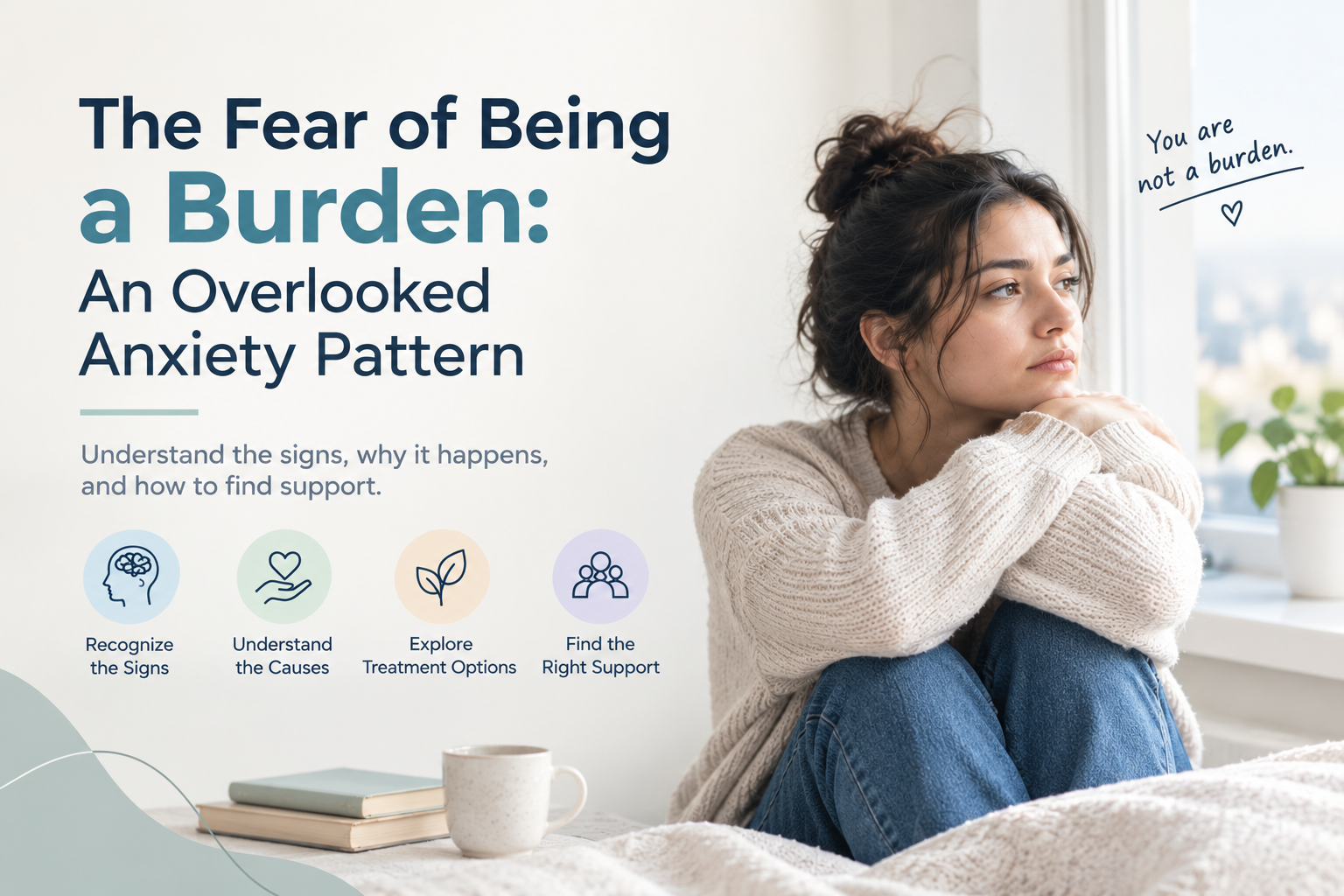
Have you ever wanted to ask someone for help but stopped because you worried about bothering them? Do you apologize for expressing your feelings, feel guilty when someone spends time listening to you, or tell yourself to handle everything alone because other people already have enough to deal with?
These experiences may reflect a fear of being a burden. For some people, this fear is connected to anxiety, low self-esteem, difficult relationship experiences, or a strong desire to keep everyone around them happy.
Although caring about other people's needs can be a positive quality, constantly worrying that your needs are inconvenient can affect your relationships, emotional well-being, and willingness to seek support.
Understanding the fear of being a burden can help you recognize unhelpful thought patterns, communicate more comfortably, and develop healthier relationships. The JustinMedz health blog can also serve as a starting point for exploring additional health and medication-related information.
What Does It Mean to Have a Fear of Being a Burden?
The fear of being a burden is the persistent concern that your needs, emotions, problems, or requests will inconvenience other people or make their lives more difficult.
Someone experiencing this fear might avoid asking a friend for advice, hide their distress from family members, or refuse assistance even when they genuinely need it. They may assume that other people will become frustrated, lose interest, or eventually distance themselves if they express their needs.
For example, imagine that you have had a difficult week and want to talk to a close friend. Instead of reaching out, you think, "They have their own problems. I shouldn't add mine to their life."
You decide to remain silent, even though your friend may be willing to listen.
This pattern can become emotionally exhausting when it happens repeatedly. Rather than evaluating whether someone is available to help, you automatically assume that asking for support is selfish or inappropriate.
Having this fear does not automatically mean you have an anxiety disorder. It is a pattern that can occur for many reasons. However, when it becomes persistent and interferes with everyday life, it may be worth discussing with a qualified mental-health professional.
The National Institute of Mental Health's anxiety disorders resource explains how anxiety can extend beyond occasional worry and affect everyday functioning.
Why Does Anxiety Make You Feel Like a Burden?
Anxiety can make uncertain situations feel threatening. When you are worried about how other people perceive you, an ordinary request for help may begin to feel like a test of your relationship.
Several thought patterns can contribute to this experience.
1. You Assume Other People Will React Negatively
You might interpret a delayed reply, a short message, or a change in someone's tone as evidence that you have annoyed them.
Instead of considering several possible explanations, your mind focuses on the most uncomfortable possibility: that you have become a problem for someone else.
For instance, if a friend takes several hours to respond, you may think, "I shouldn't have messaged them. They probably don't want to deal with me."
The reality is that a delayed response can have many explanations. The person may be working, resting, or dealing with their own responsibilities.
Anxiety can make it difficult to tolerate that uncertainty without reaching a negative conclusion.
2. You Feel Responsible for Everyone's Emotions
Some people believe that maintaining good relationships means preventing others from feeling disappointed, frustrated, or uncomfortable.
As a result, they may hide their needs, agree to things they do not want to do, or apologize whenever someone seems upset.
Over time, this can create an unrealistic sense of responsibility. You may start believing that if another person feels unhappy, you must have done something wrong.
Healthy relationships involve consideration and compromise, but you cannot control every emotion another person experiences.
You can communicate respectfully and take responsibility for your behavior without making yourself responsible for everyone's feelings.
3. You Believe Your Needs Are Less Important
If you frequently prioritize other people's comfort over your own, you may begin to treat your needs as optional.
You might postpone appointments, avoid discussing personal difficulties, or continue working when you need rest because you do not want to inconvenience anyone.
The problem is not that you care about other people. The problem arises when caring for them consistently requires you to ignore yourself.
Your needs deserve consideration, too. Asking for help does not automatically make you demanding, selfish, or difficult to support.
4. You Fear Rejection or Abandonment
For some people, the fear of being a burden is closely connected to the fear of losing relationships.
You may worry that people will leave if you express sadness, need reassurance, make mistakes, or require additional support during a difficult period.
These concerns can sometimes be influenced by past experiences, including criticism, rejection, unpredictable relationships, or situations in which your feelings were dismissed.
However, there is no single explanation for this pattern. Understanding your personal experiences can help you identify what triggers the fear without assuming that a particular event or diagnosis must be responsible.
Signs You May Be Experiencing This Pattern
The fear of being a burden can appear in everyday habits rather than obvious expressions of anxiety.
You might recognize some of the following experiences:
Apologizing repeatedly for ordinary requests or reasonable needs.
Saying "I'm fine" when you are struggling because you do not want anyone to worry.
Avoiding conversations about your feelings, even with trusted people.
Feeling guilty when someone offers help, time, money, or emotional support.
Assuming that other people are helping you out of obligation rather than genuine care.
Saying yes to requests even when you are exhausted or uncomfortable.
Overthinking messages after sending them and worrying that you said too much.
Feeling uncomfortable when you are the person receiving attention or support.
Trying to solve every problem independently, even when you feel overwhelmed.
Withdrawing from relationships because you believe people would be better off without your problems.
These experiences are not proof of a mental-health condition. Their significance depends on how often they occur, how distressing they feel, and whether they interfere with your relationships or daily activities.
If anxiety regularly affects your ability to function, the NHS guide to anxiety, fear, and panic offers information about symptoms, coping strategies, and when to seek professional support.
How the Fear of Being a Burden Can Affect Relationships
When you believe that expressing your needs will inconvenience others, you may try to protect your relationships by saying less and asking for less.
Unfortunately, this strategy can create distance instead of closeness.
You May Hide Your Real Feelings
You might tell your partner or friend that everything is fine while privately struggling with sadness, uncertainty, or stress.
Although this may prevent an uncomfortable conversation in the moment, it can make it harder for others to understand what you need.
People cannot always recognize distress that is deliberately hidden from them.
You May Struggle to Accept Support
If someone offers help, you might immediately refuse because you do not want them to feel responsible for you.
You may even feel the need to repay their kindness immediately or repeatedly apologize for accepting it.
Over time, this can make relationships feel transactional rather than mutual. Healthy relationships generally allow people to give and receive support at different times.
You May Become Emotionally Exhausted
Constantly monitoring your words, managing other people's reactions, and suppressing your own feelings requires effort.
You may eventually feel disconnected, resentful, or exhausted without fully understanding why.
The solution is not to stop considering other people. It is to make room for your own needs while continuing to treat others with respect.
Practical Ways to Overcome the Fear of Being a Burden
You do not have to eliminate every uncomfortable thought before you begin changing your behavior. Small, manageable steps can help you respond differently when the fear appears.
1. Separate Facts From Assumptions
When you think, "I'm bothering everyone," pause and ask yourself what evidence supports that conclusion.
Consider these questions:
Has the person actually told me that I am asking too much?
Could there be another explanation for their behavior?
Would I judge a friend as harshly for needing the same help?
Am I responding to what is happening now or predicting what might happen?
You do not need to convince yourself that everyone will always be available. Instead, practice recognizing that a negative prediction is not the same as a confirmed fact.
The NHS self-help CBT techniques explain approaches for identifying unhelpful thoughts and developing more balanced responses.
2. Start With Small Requests
If asking for help feels uncomfortable, begin with something manageable.
You might ask a colleague to clarify an instruction, ask a friend for advice about a minor decision, or tell a trusted person that you have had a difficult day.
Notice what happens rather than deciding in advance that the request will be unwelcome.
The goal is not to test people repeatedly or demand that they always say yes. It is to learn that making a reasonable request is not inherently wrong, even when the other person is unavailable.
3. Practice Accepting Help Without Over-Apologizing
When someone offers genuine assistance, try responding with a simple "Thank you. I appreciate that."
You do not need to provide a lengthy explanation for why you need help or promise to repay the favor immediately.
Gratitude is enough in many situations.
Remember that other people have their own choices and boundaries. Allowing someone to offer support respects their ability to decide what they can give.
4. Learn to Set Boundaries Without Excessive Guilt
The fear of being a burden can work in both directions. You may avoid asking others for help while agreeing to every request they make.
Healthy boundaries allow you to recognize your limits without treating them as personal failures.
For example, instead of agreeing to help a friend when you are exhausted, you might say, "I can't manage that today, but I hope you find a solution."
You can be kind without being available all the time.
5. Challenge the Belief That You Must Always Be Easy to Support
You may have learned to associate being valued with being independent, helpful, cheerful, or undemanding.
However, relationships are not based solely on how little support you require.
You can be a caring friend and still have difficult days. You can be a reliable partner and still need reassurance. You can be independent and still ask for help.
Try replacing the thought "I must not need anything from anyone" with a more balanced statement: "I can respect other people's limits while acknowledging my own needs."
6. Make Room for Uncertainty
You cannot guarantee that every request will be accepted or that everyone will understand your feelings perfectly.
A person may genuinely be busy, tired, or unable to help. That does not automatically mean you are a burden.
Practice allowing a reasonable request to receive a yes, a no, or a later response without turning the outcome into a judgment about your worth.
If you find yourself repeatedly avoiding situations because of anxiety, the NHS guide to facing fears explains how gradual, manageable steps can help people approach feared situations.
When Should You Seek Professional Help?
Consider speaking with a mental-health professional if the fear of being a burden frequently causes distress, damages relationships, prevents you from seeking necessary help, or makes everyday decisions difficult.
A therapist can help you explore the beliefs behind the fear and practice healthier ways of thinking, communicating, and setting boundaries. Cognitive behavioral therapy (CBT) may be useful for some people, depending on their needs and circumstances.
A clinician can also assess whether the pattern occurs alongside anxiety, depression, or another concern. Treatment should be based on an individual assessment rather than a single behavior or symptom.
Medication may be appropriate for some diagnosed conditions, but feeling like a burden alone does not establish a need for medication. Discuss treatment options with a qualified healthcare professional rather than self-diagnosing or starting medication without appropriate guidance.
For readers researching medication-related questions, JustinMedz has an online prescription and pharmacy guide. This resource should not be interpreted as a recommendation to use alprazolam for the fear of being a burden; medication decisions require an appropriate clinical assessment.
Readers can also review the guide to online prescription processes for general questions about prescription handling. Always confirm that any medicine is appropriate for you with a qualified healthcare professional.
If a clinician diagnoses a condition for which medication is appropriate, they can explain the available options. For example, the Lexapro medication category provides medication-related information, but it does not mean that Lexapro is necessary or appropriate for every person experiencing anxiety. Never start, stop, or change a prescription medicine without medical guidance.
If these feelings develop into thoughts of harming yourself or believing others would be better off without you, seek immediate support from a trusted person or mental-health professional. If you may act on those thoughts or are in immediate danger, contact local emergency services.
Frequently Asked Questions
1. Is the fear of being a burden a sign of anxiety?
It can be associated with anxiety, but it is not a diagnosis by itself. The fear may also relate to self-esteem, relationship experiences, or learned behavior. A professional assessment can help if it causes persistent distress.
2. Why do I feel guilty when someone helps me?
You may believe that accepting help creates an obligation or inconveniences the other person. Previous experiences and expectations about independence can contribute to this feeling. Practicing gratitude and allowing others to choose whether they can help may make receiving support more comfortable.
3. Can anxiety make me avoid asking for help?
Yes. Anxiety can lead you to anticipate rejection, criticism, or negative reactions. Avoiding requests may reduce discomfort temporarily, but it can also prevent you from learning whether your concerns are justified.
4. How do I stop feeling like a burden to my friends?
Start by questioning assumptions about what your friends think, making reasonable requests, and allowing them to communicate their availability. Healthy friendships involve mutual care, not a requirement that one person never needs anything.
5. Is being independent the same as never needing help?
No. Independence involves making decisions and taking responsibility where possible. Recognizing when you need assistance is also a normal part of managing everyday life.
6. Can the fear of being a burden affect romantic relationships?
Yes. It may make someone hide their feelings, avoid discussing problems, or struggle to accept affection and support. Honest communication and respectful boundaries can help both partners understand each other's needs.
7. Can therapy help with the fear of being a burden?
Therapy may help you identify unhelpful beliefs, understand their origins, and practice more balanced responses. CBT is one possible approach, although the most suitable treatment depends on an individual's circumstances.
8. Should I take medication if I constantly worry about inconveniencing others?
Not necessarily. This concern alone does not determine whether medication is appropriate. If the worry is persistent or interferes with daily life, a qualified clinician can assess your symptoms and discuss suitable treatment options.
Conclusion: You Can Care About Others Without Ignoring Yourself
The fear of being a burden can make ordinary needs feel like unreasonable demands. It may lead you to hide your feelings, decline support, or believe that you must handle every difficulty alone.
But needing help does not make you selfish, weak, or undeserving of meaningful relationships.
Start by recognizing when you are making assumptions about how others perceive you. Practice expressing small needs, accepting reasonable offers of help, and setting boundaries when you cannot give more.
You do not need to become completely independent of other people to be worthy of their care. Healthy relationships allow room for both giving and receiving support.
For more health information, explore the JustinMedz health blog. If anxiety or guilt is affecting your daily life, consider discussing your concerns with a qualified mental-health professional.

Start Web Audio Call
Enter your details to launch our secure web Audio call room instantly!