
- 💊 Buy Gabapentin Online
- 💊 Buy Butalbital Online
- 💊 Buy Tramadol Online
- 💊 Buy Xanax Online
- 💊 Buy Ambien Online
- 💊 Buy Carisoprodol Online
- 💊 Buy Hydrocodone Online
- 💊 Buy Alprazolam Online
- 💊 Buy Cialis Online
- 💊 Buy Clonazepam Online
- 💊 Buy Diazepam Online
- 💊 Buy Flexeril Online
- 💊 Buy Levitra Online
- 💊 Buy Lexapro Online
- 💊 Buy Lorazepam Ativan Online
- 💊 Buy Methadone Online
- 💊 Buy Viagra Online
- 💊 Buy Valium Online
- 💊 Buy Tapentadol Online
- 💊 Buy Neurontin Online
- 💊 Buy Adderall Online
Why Calm Moments Can Feel Uncomfortable After Long Periods of Stress
- Home
- /
- Blog
- /
- Why Calm Moments Can Feel Uncomfortable After Long Periods of Stress
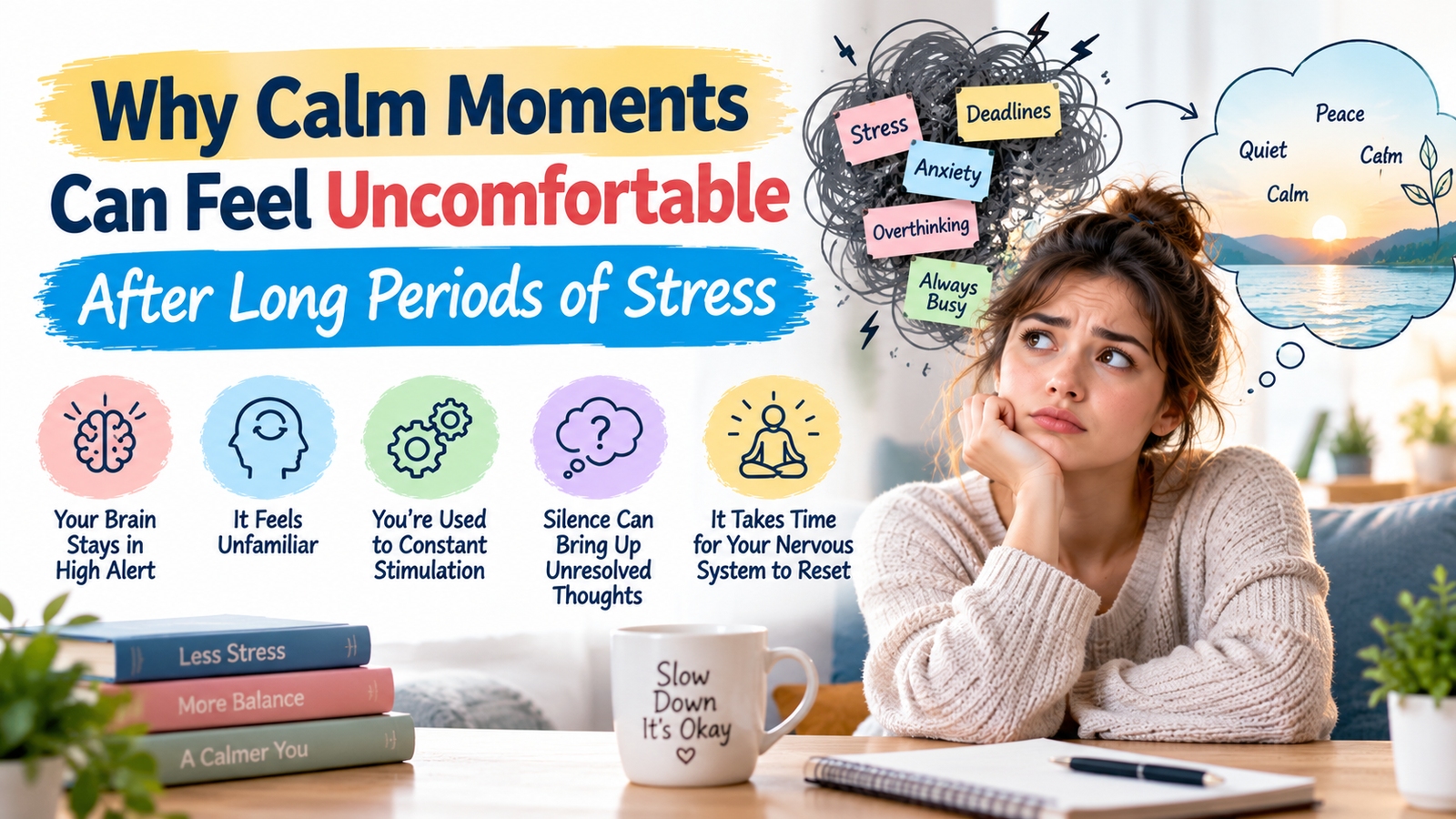
Have you ever finished a stressful week, finally had some free time, and still felt unable to relax? You might sit quietly, watch television, or lie down to rest, yet your mind keeps searching for something to worry about. Instead of feeling peaceful, you feel restless, uneasy, or strangely uncomfortable.
This experience can happen after prolonged stress. When you have spent a long time managing responsibilities, uncertainty, conflict, or emotional pressure, slowing down may feel unfamiliar. Your body may have stopped dealing with the immediate problem, but your thoughts and physical tension may take longer to settle.
Calm moments can feel uncomfortable after long periods of stress because your mind may remain focused on potential problems even when there is no immediate demand for action. This does not necessarily mean something is wrong with you. However, if the uneasiness persists, disrupts sleep, or interferes with daily life, it may be worth discussing with a qualified healthcare professional.
Why Does Relaxation Feel Strange After Prolonged Stress?
Stress is a normal response to challenges. It can help you respond to deadlines, solve problems, or deal with unexpected situations. But when pressure continues for weeks or months, it may become harder to switch off from worry.
The National Institute of Mental Health explains that stress and anxiety can affect mental and physical well-being, including sleep, concentration, and muscle tension. Its guide to stress and anxiety explains common effects and ways to cope.
1. Your Mind Has Become Used to Looking for Problems
When you regularly face deadlines, financial concerns, relationship difficulties, or unpredictable situations, you may start anticipating what could go wrong next.
When a problem finally disappears, your mind may continue asking questions:
Have I forgotten something important?
What will happen when the next problem arrives?
Should I be doing something productive right now?
Is there a reason I should not feel comfortable yet?
These thoughts can make peace feel temporary or suspicious. You may begin looking for a new concern simply because being alert has become familiar.
The goal is not to stop thinking altogether. It is to learn that not every thought requires immediate attention or action.
2. Your Body May Still Feel Tense
Stress does not affect thoughts alone. It can also contribute to muscle tightness, headaches, stomach discomfort, changes in sleep, and a faster heartbeat.
After a demanding period, you might notice these sensations more clearly once you stop moving. Shoulder tension that went unnoticed during work may become obvious when you sit down.
The NHS guide to stress explains how stress can affect the body, mood, concentration, and behaviour.
If physical tension is one of your main concerns, you can also explore the JustinMedz carisoprodol category as a medication-information resource. This is not a recommendation to use a muscle relaxant for stress; medication suitability should be assessed by a qualified clinician.
3. Staying Busy May Have Become a Way to Avoid Difficult Feelings
Some people cope with stress by keeping themselves occupied. They work longer hours, fill every spare moment with tasks, or constantly check messages and notifications. Being busy can provide structure and a temporary break from uncomfortable thoughts.
However, when activity becomes the only way to feel okay, quiet moments can bring previously postponed emotions to the surface.
You may notice sadness, frustration, loneliness, uncertainty, or fatigue that you did not have time to acknowledge earlier. This does not mean rest is causing those feelings. It may simply be giving you an opportunity to notice them.
If you recognise this pattern, try making room for short periods of rest without expecting yourself to feel completely calm immediately. You can explore more health-related reading in the JustinMedz blog section.
4. You May Feel Guilty When You Are Not Being Productive
Long-term pressure can create the belief that your value depends on how much you accomplish. When you finally have an hour free, you might feel guilty for resting instead of completing another task.
This can create a frustrating cycle: you need rest because you are exhausted, but you feel anxious whenever you try to rest.
A useful reminder is that recovery is not a reward you must earn after doing everything perfectly. Sleep, meals, movement, social connection, and downtime are ordinary parts of maintaining well-being.
Try replacing “I should be doing something” with “Rest is one of the things I need to do today.” You do not have to justify every quiet moment.
5. Uncertainty Can Feel Harder Than a Clear Problem
A specific problem often comes with a task: make a phone call, meet a deadline, or have a difficult conversation. When that task is finished, you may expect to feel relieved.
But life rarely provides complete certainty. Even when one problem is resolved, other questions remain unanswered. If you are used to feeling safe only when everything is under control, an ordinary quiet moment can bring uncertainty back into focus.
It can help to separate what needs action today from what is only a possibility. If a concern has no practical next step right now, consider writing it down and returning to the present activity.
Is This Stress, Anxiety, or Something Else?
Feeling uneasy during downtime does not, by itself, establish that you have an anxiety disorder. Stress, anxiety, poor sleep, emotional exhaustion, grief, life changes, medication effects, and physical health conditions can overlap in how they feel.
These descriptions are not a diagnostic test. The National Institute of Mental Health's information on generalized anxiety disorder explains that anxiety becomes a clinical concern when symptoms are persistent, difficult to control, and disruptive to everyday life.
Pay attention to how often the feeling occurs, how long it lasts, and whether it affects relationships, work, sleep, or your ability to enjoy activities. A healthcare professional can help you understand the pattern and consider appropriate next steps.
How to Feel More Comfortable During Calm Moments
You do not need to force yourself to relax. Treating relaxation as another task you must perform perfectly can add pressure. A gentler approach is to practise tolerating quiet moments while giving your mind and body consistent signals of safety and routine.
Start With Small Periods of Rest
If an entire free evening feels uncomfortable, start with five or ten minutes. Sit outside, listen to music, have a warm drink, or take a short walk without turning the activity into a productivity goal.
You can gradually increase the time as it becomes more familiar. The aim is not to eliminate every uncomfortable thought, but to discover that you can experience a quiet moment without needing to escape it.
Use Gentle Breathing or Grounding
Try breathing slowly and comfortably, without forcing deep breaths. You can also notice your feet on the floor, the support of the chair, or a few sounds around you.
These practices may help bring your attention back to the present. If focusing on your breathing makes you more uncomfortable, choose another grounding activity instead.
MedlinePlus offers an overview of relaxation techniques for stress, including breathing and other methods people can try to manage tension.
Give Worries a Specific Time and Place
When a concern appears during rest, write it down instead of trying to solve it immediately. Later, set aside a short period to review the list and identify any realistic next steps.
For example:
Concern: I might fall behind at work.
Action I can take: List the three most important tasks for tomorrow.
What can wait: Imagining every possible problem that might happen next week.
This approach acknowledges your concern without allowing it to take over the whole evening.
Protect Your Sleep Routine
Stress and anxiety can interfere with sleep, while insufficient sleep can make it harder to cope with daily pressure. Try to keep a reasonably consistent sleep and wake schedule, reduce caffeine later in the day if it affects you, and give yourself time to wind down before bed.
If you regularly lie awake worrying, consider speaking with a healthcare professional rather than assuming you simply need more willpower.
For general information about sleep-related medication, the JustinMedz Ambien category provides another site resource. Sleep medication is not appropriate for everyone and should not be treated as a substitute for understanding persistent anxiety or sleep difficulties.
Reintroduce Enjoyable Activities Without Pressure
Choose activities that feel meaningful or pleasant rather than activities that must produce a measurable result. Examples include gardening, drawing, cooking, reading, gentle exercise, or talking with someone you trust.
You may not enjoy these activities immediately, especially if you have been exhausted for a long time. Give yourself permission to participate without demanding that every moment feel good.
Consider Professional Support
If persistent worry or physical tension makes it difficult to relax, a mental health professional can help you identify patterns and develop coping strategies. Cognitive behavioural therapy (CBT) is one established approach for anxiety-related difficulties; other treatments may be appropriate depending on your needs.
For further background, the NHS anxiety and panic guide discusses symptoms, self-help approaches, and when to seek support.
How Can You Tell If You Are Starting to Recover From Stress?
Recovery does not always mean feeling calm all the time. Progress may be subtle and uneven. You might notice that you can pause before reacting to a worry, enjoy a short break without checking your phone, or return to a task after a stressful thought without spending an hour analysing it.
Other signs may include improved sleep, less persistent muscle tension, greater concentration, and more willingness to ask for help. These changes can take time, and difficult days do not necessarily mean you have lost progress.
Instead of asking, “Am I completely relaxed yet?” try asking, “Am I finding it a little easier to respond to stress than I did before?”
Medication and Mental Health: What to Know
Medication can be part of treatment for some anxiety disorders, but it is not the right option for everyone and should not be used as a shortcut to eliminate ordinary discomfort during rest. A clinician can discuss potential benefits, side effects, interactions, and alternatives based on an individual assessment.
For readers researching prescription medicines, the JustinMedz Lexapro category is a site resource for medication-related information. Lexapro is a brand of escitalopram, an antidepressant that may be prescribed for certain mental health conditions. It is not an immediate-relief treatment and is not suitable for everyone.
The JustinMedz lorazepam category and JustinMedz Valium category are also available as medication-information references. Lorazepam and diazepam (Valium) belong to the benzodiazepine class. These medicines can cause sedation, tolerance, dependence, and withdrawal problems and require particular caution and professional oversight.
Do not start, stop, share, or change medication without guidance from a qualified prescriber. Confirm product details and pharmacy legitimacy before relying on any online listing.
Frequently Asked Questions
Why do I feel anxious when nothing is wrong?
Your mind may continue anticipating problems after a stressful period has passed. Anxiety can also occur without an obvious immediate threat. If it persists or interferes with daily life, seek professional advice.
Can long-term stress make it difficult to relax?
Yes. Ongoing stress can contribute to worry, muscle tension, sleep difficulties, and a sense of being constantly on alert. People differ in how they respond, and persistent symptoms deserve attention.
Why do I feel restless when I finally have free time?
You may be accustomed to staying busy, avoiding difficult feelings, or measuring your day by what you accomplish. Short, low-pressure breaks can help you become more comfortable with downtime over time.
Is feeling uncomfortable during calm moments a sign of an anxiety disorder?
Not necessarily. This feeling can happen for many reasons. An anxiety disorder is assessed by considering symptoms, duration, severity, and impact on everyday life—not by one experience alone.
How can I stop overthinking when I try to rest?
Write down recurring concerns, identify whether any action is needed now, and gently return to a simple present-moment activity. If the thoughts remain persistent or distressing, professional support may help.
Can stress cause muscle tension and sleep problems?
Stress can contribute to muscle tension, headaches, and disrupted sleep. However, these symptoms can have other causes, so ongoing or concerning symptoms should be assessed by a healthcare professional.
When should I consider therapy for stress or anxiety?
Consider therapy when worry is persistent, hard to manage, or interfering with sleep, relationships, work, or everyday activities. A professional can help identify an appropriate approach.
Should I take anxiety medication if I cannot relax?
Do not choose medication based only on difficulty relaxing. A qualified healthcare professional can assess what is causing the symptoms and discuss whether therapy, lifestyle changes, medication, or a combination may be appropriate.
Conclusion
Feeling uncomfortable when life finally becomes quiet can be confusing, especially when you expected rest to bring immediate relief. After a prolonged period of stress, your thoughts and body may need time to adjust to a slower pace.
You do not have to force yourself to feel peaceful. Start with small breaks, notice what triggers your uneasiness, protect your sleep, and give worries a practical place to be addressed. If anxiety continues to affect your life, professional support can help you understand what is happening and find a way forward.

Start Web Audio Call
Enter your details to launch our secure web Audio call room instantly!