
- 💊 Buy Gabapentin Online
- 💊 Buy Butalbital Online
- 💊 Buy Tramadol Online
- 💊 Buy Xanax Online
- 💊 Buy Ambien Online
- 💊 Buy Carisoprodol Online
- 💊 Buy Hydrocodone Online
- 💊 Buy Alprazolam Online
- 💊 Buy Cialis Online
- 💊 Buy Clonazepam Online
- 💊 Buy Diazepam Online
- 💊 Buy Flexeril Online
- 💊 Buy Levitra Online
- 💊 Buy Lexapro Online
- 💊 Buy Lorazepam Ativan Online
- 💊 Buy Methadone Online
- 💊 Buy Viagra Online
- 💊 Buy Valium Online
- 💊 Buy Tapentadol Online
- 💊 Buy Neurontin Online
- 💊 Buy Adderall Online
Why Stress Can Make It Hard to Fall Asleep
- Home
- /
- Blog
- /
- Why Stress Can Make It Hard to Fall Asleep
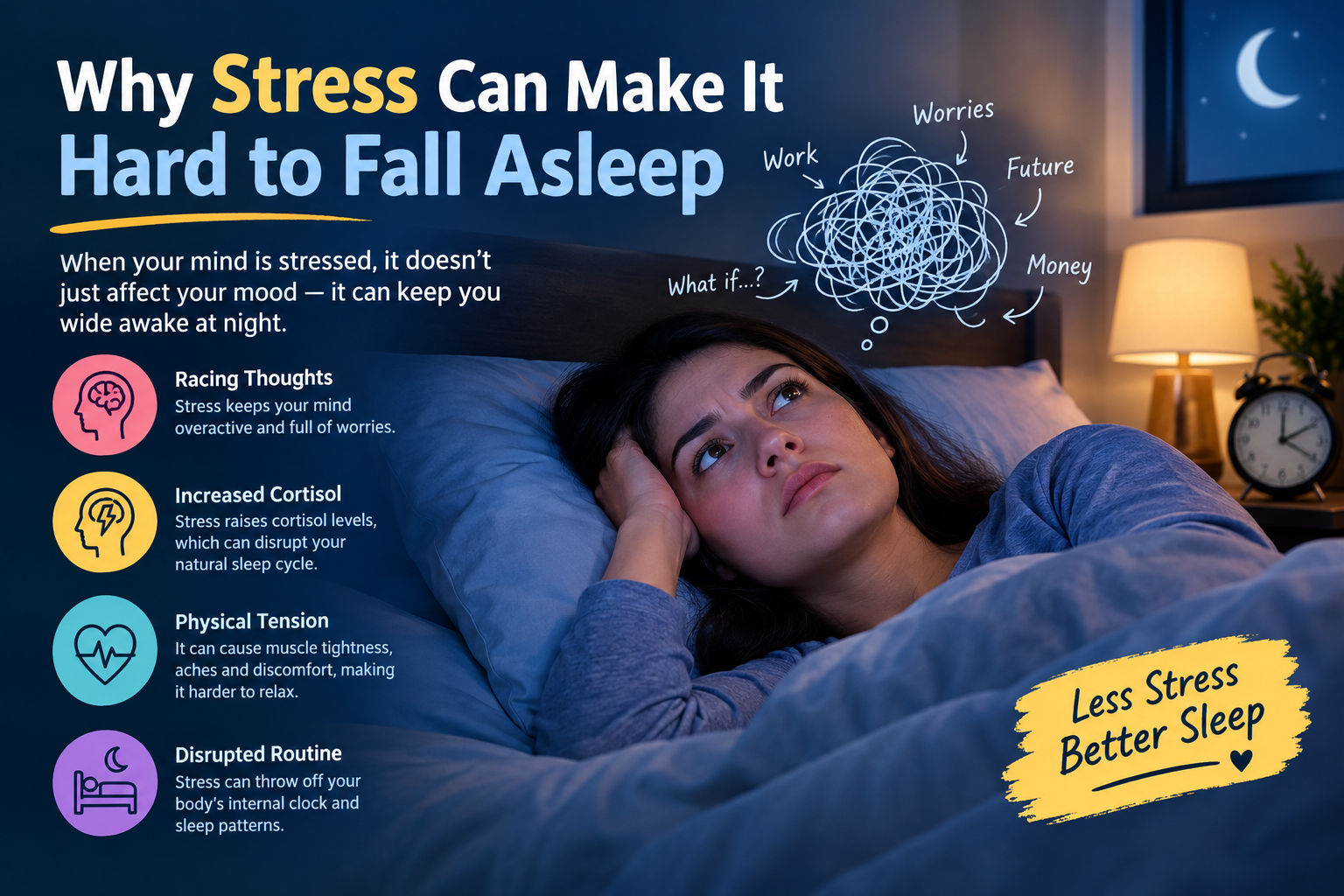
Stress can affect almost every part of daily life, including the ability to get a good night's sleep. You may feel physically exhausted after a demanding day but still find yourself lying awake, replaying conversations, worrying about tomorrow, or thinking about unfinished responsibilities. The more you try to force yourself to sleep, the more difficult it can become.
This connection between stress and sleep is common. According to the National Heart, Lung, and Blood Institute's guide to insomnia causes, worries about work, relationships, finances, and other life events can increase the risk of insomnia.
Understanding why stress makes falling asleep difficult can help you develop healthier bedtime habits and recognize when professional support may be needed. This guide explains how stress affects sleep, practical ways to calm nighttime worries, and what to understand about medicines such as lorazepam when anxiety symptoms require medical assessment.
How Does Stress Affect Your Ability to Fall Asleep?
Stress is the body's response to a perceived challenge or threat. It can be triggered by a deadline, financial uncertainty, relationship difficulties, family responsibilities, or concerns about health.
When you experience stress, your brain and body become more alert. This response can help you respond to immediate challenges, but it may become disruptive when it continues into the evening.
Instead of gradually relaxing, you may experience racing thoughts, muscle tension, restlessness, or a heightened awareness of everyday sounds. Your body may feel tired while your mind remains active.
The MedlinePlus insomnia overview explains that short-term insomnia can develop during stressful life events and that ongoing sleep difficulties may have several contributing causes.
Stress does not affect everyone in the same way. Some people struggle to fall asleep, others wake repeatedly throughout the night, and some wake earlier than intended.
Why Stress Makes Your Mind Stay Awake at Night
1. Racing thoughts and overthinking
During the day, work, conversations, and routine activities can distract you from worries. At bedtime, those distractions disappear, giving anxious thoughts more room to occupy your attention.
You might replay an uncomfortable conversation, imagine a future problem, or repeatedly think about everything you need to accomplish the next day.
These thoughts can create a cycle: worrying makes it harder to sleep, and noticing that you are still awake creates more worry.
If you regularly experience anxiety alongside sleep difficulties, learning about lorazepam medication information and its clinical uses may help you prepare informed questions for a qualified healthcare professional. Medication is not automatically necessary for stress-related sleeplessness, and treatment should address the underlying cause.
2. Increased physical alertness
Stress can produce physical sensations such as a faster heartbeat, tense shoulders, jaw clenching, restlessness, and shallow breathing. These sensations may make it harder to feel comfortable and relaxed in bed.
Your body can remain alert even after the stressful event has ended. For example, a difficult workday may be over, but your thoughts about the next morning can keep your attention focused on potential problems.
Relaxation exercises, gentle stretching, and slow, comfortable breathing may help you transition from daytime activity to bedtime.
3. Worry about not getting enough sleep
After several difficult nights, sleep itself can become a source of anxiety.
You may begin checking the clock, calculating how many hours remain before you need to wake up, or worrying about how tired you will feel the next day.
Unfortunately, trying too hard to make sleep happen can increase frustration and alertness.
If you find yourself repeatedly worrying about sleep and anxiety, the National Institute of Mental Health's guide to generalized anxiety disorder provides information about persistent worry, treatment approaches, and when professional support may help.
Common Signs of Stress-Related Sleep Problems
Stress-related sleep difficulties can affect both nighttime rest and daytime functioning.
Common signs include:
Taking a long time to fall asleep despite feeling tired.
Replaying conversations, mistakes, or responsibilities in your mind.
Feeling restless or physically tense at bedtime.
Waking during the night and struggling to return to sleep.
Feeling irritable, distracted, or unusually tired during the day.
Worrying about sleep before going to bed.
Depending on caffeine to manage daytime fatigue.
These symptoms do not automatically mean you have an insomnia disorder. Pain, medication effects, depression, anxiety disorders, sleep apnea, and changes in your sleep schedule can also contribute.
If sleep problems continue, a healthcare professional can help identify the likely cause and discuss suitable treatment options.
The Connection Between Anxiety, Stress, and Insomnia
Stress and anxiety often overlap, but they are not exactly the same.
Stress is commonly associated with an identifiable challenge, such as a demanding project or family problem. Anxiety may continue even when the immediate problem has passed or may involve persistent worry about possible future events.
Both can interfere with sleep by making it difficult to disengage from worries and relax physically.
Poor sleep can then make emotional regulation more difficult. You may feel less patient, have trouble concentrating, or find ordinary challenges more overwhelming. These effects can increase stress and create a repeating cycle.
If persistent anxiety is affecting your daily life, a healthcare professional can assess whether psychological therapy, medication, or a combination of approaches may be appropriate. The NIMH mental health medications resource explains how different medication classes may be used to treat mental health conditions.
For readers researching prescription treatment, the lorazepam category information can serve as a starting point for learning about the medicine. However, lorazepam is a benzodiazepine used for certain anxiety-related conditions, and it should not be presented as a routine solution for everyday stress or persistent insomnia.
Can Lorazepam Help When Anxiety Makes Sleep Difficult?
Lorazepam is a prescription benzodiazepine that acts on the central nervous system. It may be prescribed for certain anxiety disorders or anxiety symptoms, depending on the patient's clinical circumstances.
Because it can cause sedation, some people may assume it is an appropriate option whenever stress interferes with sleep. That assumption is not safe. Difficulty falling asleep can have many causes, and lorazepam is not suitable for everyone or for unsupervised use as a sleep aid.
A healthcare professional may consider factors such as the severity of anxiety, medical history, other medicines, alcohol use, and the potential risks of treatment before prescribing it.
If you are researching this medicine, you can read the lorazepam medication category guide and discuss any questions with a licensed healthcare professional.
Important safety considerations
Lorazepam can cause drowsiness, dizziness, impaired coordination, and memory-related effects. Benzodiazepines also carry risks of misuse, addiction, physical dependence, and withdrawal.
The US Food and Drug Administration explains these risks in its benzodiazepine drug safety communication.
Important precautions include:
Use lorazepam only when prescribed to you and exactly as directed.
Do not combine it with alcohol.
Do not combine it with opioids or other sedating medicines unless a qualified prescriber has specifically assessed and directed the combination.
Do not drive or operate machinery if you are impaired by the medicine.
Do not increase the dose or take extra doses because you are struggling to sleep.
If you have been taking lorazepam regularly, do not stop suddenly without medical guidance, because withdrawal can be serious.
The medicine should not replace an assessment of persistent sleep problems or the underlying causes of stress and anxiety.
7 Practical Ways to Reduce Stress Before Bed
For many people, improving sleep habits and addressing the source of stress are useful first steps.
1. Establish a consistent sleep schedule
Try to go to bed and wake up at approximately the same time every day, including weekends. A regular schedule helps reinforce your body's sleep-wake rhythm.
Avoid making bedtime significantly earlier simply because you had a poor night. Going to bed when you are sleepy can help reduce the time spent lying awake and worrying about sleep.
2. Create a wind-down routine
Give yourself 30–60 minutes to transition from daytime responsibilities to rest.
You might dim the lights, take a warm shower, read a book, listen to calm music, or do gentle stretches.
The NHS guide to falling asleep faster offers practical suggestions for managing nighttime worries and creating a more relaxing bedtime routine.
3. Write down tomorrow's responsibilities
If you keep mentally reviewing tasks, spend a few minutes writing them down before bed.
Separate the list into tasks that require action tomorrow and concerns that cannot be resolved tonight. This can make responsibilities feel more organized and reduce the urge to keep rehearsing them mentally.
Writing down worries does not eliminate every concern, but it can provide a structured way to postpone problem-solving until a more suitable time.
4. Reduce caffeine later in the day
Caffeine can interfere with sleep, particularly when consumed in the afternoon or evening. Coffee, energy drinks, tea, and some soft drinks can all contribute.
Consider reducing late-day caffeine and observing whether your sleep improves. Nicotine may also interfere with sleep, while alcohol can disrupt sleep quality even if it initially makes you feel sleepy.
5. Get out of bed if you remain wide awake
If you have been lying awake for a while and become frustrated, consider getting out of bed and doing something quiet in dim lighting.
Return to bed when you feel sleepy. This approach can help reduce the association between your bed and the stress of trying to fall asleep.
The MedlinePlus sleep-habit guide provides additional suggestions for improving sleep routines.
6. Practise gentle breathing or relaxation
Try breathing slowly and comfortably, without forcing deep breaths or holding your breath if that feels uncomfortable.
You can also relax your shoulders, unclench your jaw, and notice where you are holding tension. A short mindfulness exercise may help redirect attention from worries to the present moment.
If an exercise makes you feel more uncomfortable, stop and choose a different calming activity.
7. Address ongoing stress during the day
Bedtime routines can help, but they may not be enough if the underlying source of stress remains unresolved.
Consider setting boundaries around work, breaking large responsibilities into smaller tasks, talking with someone you trust, or seeking counselling when worries feel difficult to manage.
For persistent insomnia, ask a healthcare professional about cognitive behavioural therapy for insomnia (CBT-I). This structured treatment addresses thoughts and behaviours that can maintain sleep difficulties and is an established treatment option for ongoing insomnia.
When Should You Seek Professional Help?
Occasional difficulty sleeping during a stressful period is common. However, recurring sleep problems deserve attention when they begin affecting your daily life.
Consider arranging a medical assessment if:
You regularly struggle to fall asleep or stay asleep.
Daytime fatigue interferes with work, study, relationships, or driving.
Anxiety or low mood is becoming difficult to manage.
Pain, breathing problems, or unusual nighttime symptoms disrupt your sleep.
You suspect a medicine or substance is affecting your sleep.
You feel you need medication repeatedly to get through the night.
A clinician can review your sleep pattern, medical history, mental health symptoms, and current medicines. Treatment may involve changes to sleep habits, CBT-I, therapy for anxiety, treatment of another health condition, or medication when clinically appropriate.
If you already take lorazepam, tell your prescriber about continuing sleep difficulties rather than changing the dose yourself. You can also review the lorazepam category page as an educational reference, but it cannot replace individualized medical advice.
Seek urgent medical help if you experience severe breathing difficulty or another serious reaction after taking a sedating medicine. If you are struggling to stay awake, do not drive.
Frequently Asked Questions
1. Why does stress make me feel tired but unable to sleep?
Stress can increase mental and physical alertness, making it difficult to relax even when you are exhausted. Racing thoughts, muscle tension, and worry about the next day can delay sleep.
2. Can stress cause insomnia?
Yes. Stressful events and ongoing worries can contribute to short-term insomnia. If sleep difficulties persist, other factors—including anxiety, depression, pain, medicines, or sleep disorders—may also need assessment.
3. How can I calm my mind before sleeping?
Try writing down tomorrow's tasks, reducing screen-related distractions, using gentle relaxation exercises, and following a consistent wind-down routine. If worrying remains persistent, counselling or structured psychological treatment may help.
4. Is lorazepam suitable for stress-related sleep problems?
Lorazepam is a prescription medicine used for certain anxiety-related conditions. It is not an appropriate self-treatment for ordinary stress or every episode of insomnia. A qualified healthcare professional should assess whether it is suitable, taking account of its sedation, dependence, and withdrawal risks.
5. Can I take lorazepam with alcohol to help me sleep?
No. Alcohol can increase the sedating effects of lorazepam and raise the risk of dangerous reactions, including impaired consciousness and breathing problems. Do not combine them.
6. When should I talk to a doctor about sleep problems?
Seek medical advice when sleep difficulties continue, affect daytime functioning, or occur alongside significant anxiety, low mood, pain, or other symptoms. A professional can help identify the cause and discuss suitable treatments.
Conclusion
Stress can make it difficult to fall asleep by keeping your mind focused on worries and your body in a state of alertness. When poor sleep leads to fatigue and greater emotional sensitivity, the problem can become self-reinforcing.
A consistent sleep schedule, a relaxing bedtime routine, reduced late-day caffeine, and practical stress-management strategies can help. Persistent symptoms may require professional assessment, particularly when anxiety or another health condition is involved.
Lorazepam may have a role in treating certain anxiety-related conditions when prescribed, but it carries important risks and should not be used independently as a solution for sleeplessness. Understanding the cause of your sleep problems is an important step toward finding an appropriate, sustainable approach to better rest.

Start Web Audio Call
Enter your details to launch our secure web Audio call room instantly!